


Key components of oil-immersed transformers
1. Core (Transformer or Electromagnet Core)
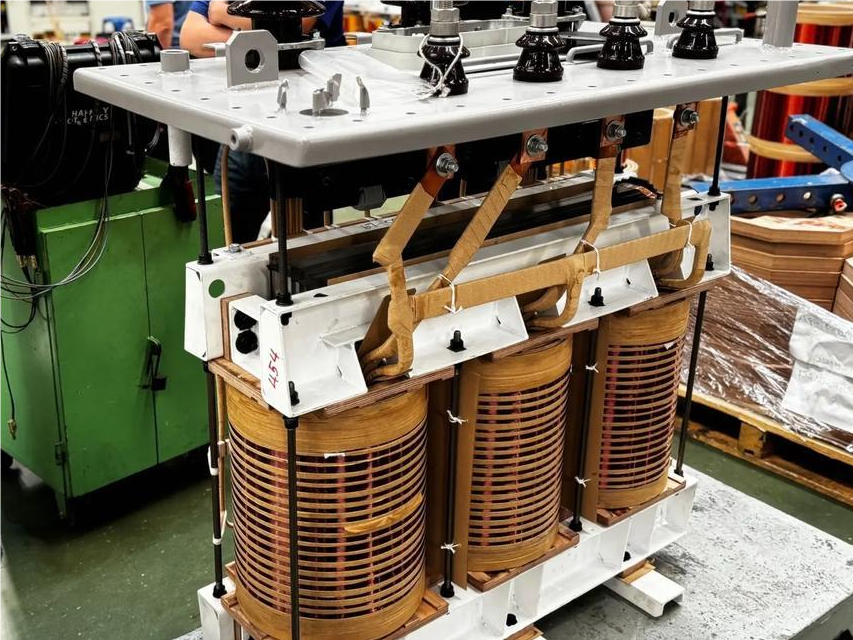
The core is the most important part of the equivalent circuit of an oil-immersed transformer. It is typically made of hot-rolled or cold-rolled steel, iron oxide magnetic core, with a silicon content of approximately 5%, a thickness of 0.35 mm or 0.5 mm, and a surface coating for corrosion resistance. These cores are made by stacking silicon-containing steel or iron oxide magnetic sheets. The core consists of two parts: the core column and the yoke. Coils are wound on the core column, while the yoke is used to close the equivalent circuit. The basic form of the core structure is heart-shaped or shell-shaped.
2. Windings
Windings are part of the circuit of an oil-immersed transformer. They are typically made by winding flat copper wire or round copper core wire wrapped with an insulating layer on a winding die. The winding sleeve is fitted onto the core column of the oil-immersed transformer. The low-voltage winding is located in the inner layer, while the high-voltage winding is placed on the surface layer of the low-voltage winding. Threaded caps made of insulating material are used for isolation between the low-voltage winding and the core, and between the high-voltage winding and the low-voltage winding, which helps improve insulation performance.
3. Transformer Oil
The composition of transformer oil in oil-immersed transformers is quite complex. It is typically composed of cycloalkanes, ethane, and aliphatic hydrocarbons. In oil-immersed transformers used in power distribution equipment, transformer oil plays two key roles: first, it acts as an insulating layer between the windings and the core, between the windings and the core, and inside the tank. Second, when the oil is heated, it generates thermal convection, which helps conduct heat to the transformer core and windings. Common oil-immersed transformer oil grades include 10#, 25#, or 45#. The temperature indicated by this grade refers to the temperature at which the oil begins to solidify at zero degrees Celsius. For example, "25#" engine oil means that this grade of engine oil begins to solidify at -25°C. The appropriate engine oil grade should be selected according to local natural conditions.
4. Oil Tank
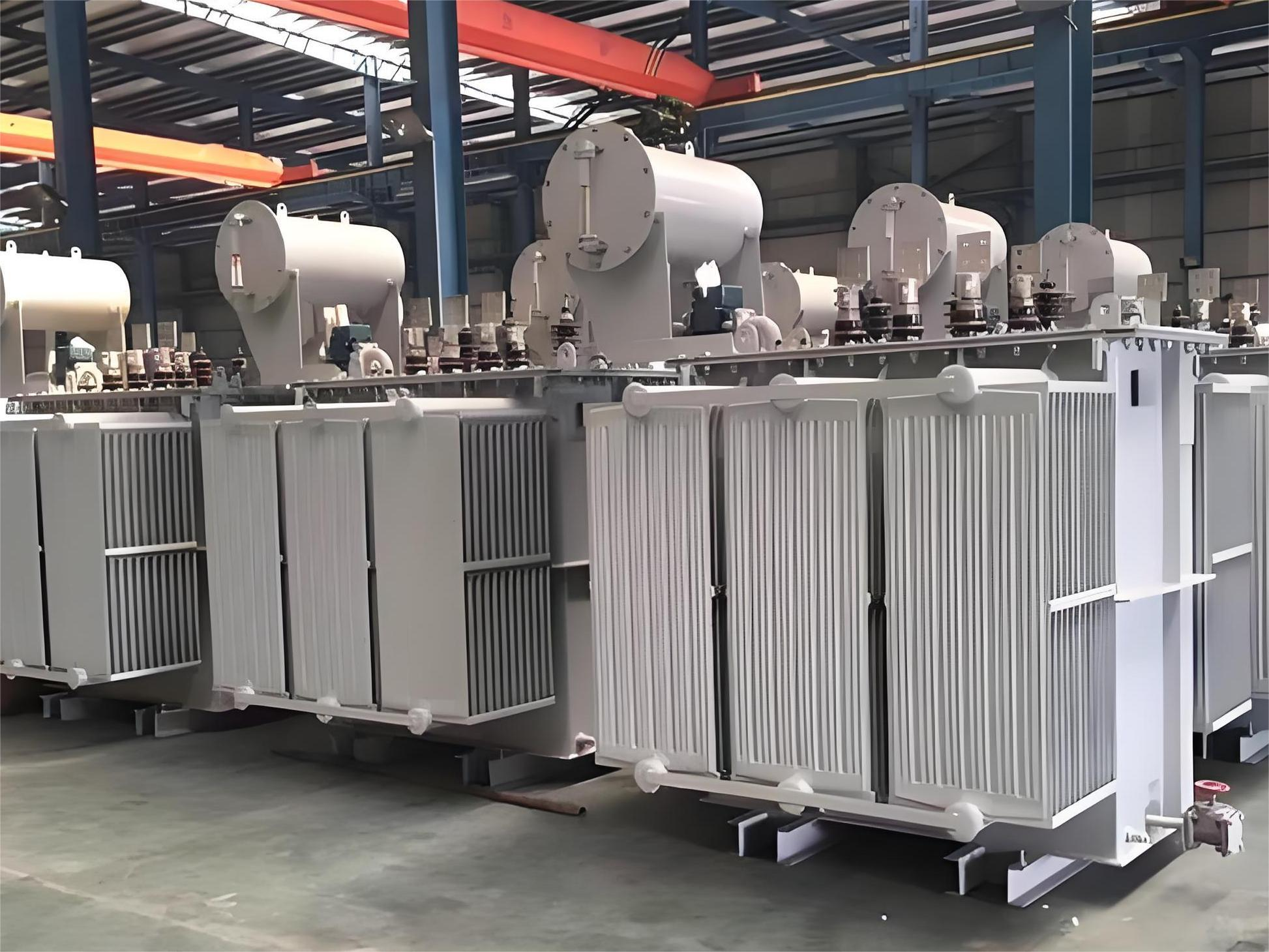
The oil conservator is installed on the cover of the engine oil tank. The oil conservator's volume is approximately 10% of the engine oil tank's weight. It is connected to the engine oil tank via piping. When the oil in the oil-immersed transformer expands or contracts with temperature changes, the conservator acts as an oil reservoir and replenishes the oil, ensuring the core and windings are always submerged. Furthermore, the reduced contact area between the oil and air slows down oil degradation.
An oil level indicator is located on the side of the tank. Near the glass tube are reference lines indicating the relative oil level at -30℃, +20℃, and +40℃. These lines indicate the appropriate relative oil level for unused oil-immersed transformers and effectively reflect whether there is sufficient remaining oil under various operating conditions.
A vent is provided on the conservator to allow the upper chamber to circulate with the atmosphere. When the oil in the transformer expands or contracts due to heat, gas can enter or exit through the vent, causing the oil level to rise or fall, preventing tank deformation or damage.
5. Insulating Bushing
This is an important insulation layer device on the tank of an oil-immersed transformer. Most oil-immersed transformers use porcelain insulating bushings for insulation. Through the high and low voltage insulating bushings, the high and low voltage windings of the oil-immersed transformer are connected from the inside of the tank to the outside, providing insulation protection for the winding-to-ground voltage (outer shell and core). In addition, it is a major component connecting the fixed wires to the external circuit. High-voltage porcelain bushings are relatively tall and large, while low-voltage porcelain bushings are relatively short.
6. Tap Changer
For oil-immersed transformers, by changing the tap changer on the high-voltage winding and adjusting the tap position, the number of turns in part of the primary winding coil can be increased or decreased, thereby changing the voltage ratio and achieving voltage regulation. For oil-immersed transformers taken out of operation and disconnected from the grid, voltage can be regulated by manually switching the tap changer area; this operation is called no-load tap changing.
7. Gas Relay
The gas relay is connected in the middle of the rubber tube between the oil tank and the oil conservator of the oil-immersed transformer and is connected to the control circuit, forming a gas protection device. The upper contact of the gas relay forms an independent control circuit with the light gas signal, while the lower terminal of the gas relay is connected to the external circuit, constituting heavy gas protection. The heavy gas location triggers a heavy gas trip signal from the high-voltage universal circuit breaker.
8. Explosion-proof Pipe
The explosion-proof pipe is a safety protection device for oil-immersed transformers. It is connected to the upper part of the oil tank cover of the oil-immersed transformer and is open to the atmosphere. When the transformer malfunctions and generates heat, the oil in the oil-immersed transformer will vaporize, thereby triggering the gas relay to issue an alarm signal or cut off the power supply to prevent the oil tank from rupturing.
Get a Quote
Regardless of whether you require general advice or specific support, we are happy to help you.