


Types and causes of energy loss in transformers
As a core component of power transmission systems, transformer energy loss directly impacts grid efficiency and operating costs. Energy loss primarily includes iron loss and copper loss, as well as some secondary losses. The following is a detailed analysis of the causes, influencing factors, and optimization directions for various types of losses.
I. Iron Loss (No-Load Loss)
Iron loss refers to the loss generated by the transformer under no-load conditions (i.e., when the secondary side is open-circuited). It is mainly caused by the magnetization process of the core material, including hysteresis loss and eddy current loss.
1. Hysteresis Loss
Principle: Under the action of an alternating magnetic field, the core is repeatedly magnetized (the direction of the magnetic domains constantly changes), and friction and collisions between molecules generate heat. Hysteresis loss is closely related to the hysteresis characteristics of the material, the alternation frequency of the magnetic field, and the magnetic flux density.
Influencing Factors: The smaller the hysteresis loop area of the material, the lower the loss. Silicon steel sheets are widely used due to their low hysteresis characteristics. Hysteresis loss can be further reduced by reducing the carbon content in silicon steel sheets and optimizing grain orientation (e.g., oriented silicon steel sheets).
Optimization Directions: Use materials with high permeability and low hysteresis loops (such as amorphous alloys), or improve the microstructure of the material through heat treatment.
2. Eddy Current Loss
Principle: Alternating magnetic fields generate closed eddy currents in the iron core. According to Joule's law (P = I²r = I²R),
P = I²
(R), the eddy currents generate heat on the iron core resistance. Eddy current loss is proportional to frequency, iron core thickness (plate thickness), and the conductivity of the material.
Influencing Factors: The greater the thickness of the magnetic core, the longer the eddy current path, and the greater the loss. Materials with high conductivity generate stronger eddy currents.
Optimization Directions: Use a layered structure composed of thin silicon steel sheets (typically between 0.23 and 0.5 mm thick), and add insulating layers between the sheets to block the eddy current path. Suppress eddy currents by using high resistivity materials (such as amorphous alloys).

2. Copper Loss (Load Loss)
Copper loss refers to the losses caused by the resistance of the winding and the current flowing through it; it is also known as load loss.
Principle: When current flows through a coil, a voltage drop occurs due to the resistance (R) of the conductor.
The existence of resistance (R) is based on Joule's law (P = I²R = I²r).
P = I²(R), electrical energy is converted into heat energy. Copper loss is proportional to the square of the current and increases significantly with increasing load.
Influencing Factors: The resistance of the conductor is affected by the resistivity of the material (copper has a higher resistivity than aluminum), the cross-sectional area of the conductor, the length of the winding, and temperature. Under high loads, the current increases, and copper loss also increases sharply.
Optimization Directions: Increase the cross-sectional area of the conductor to reduce resistance; select materials with low resistivity (such as copper conductors); optimize the winding structure (such as spiral or foil winding) to shorten the conductor length; enhance heat dissipation design (such as adding heat sinks and oil cooling systems).
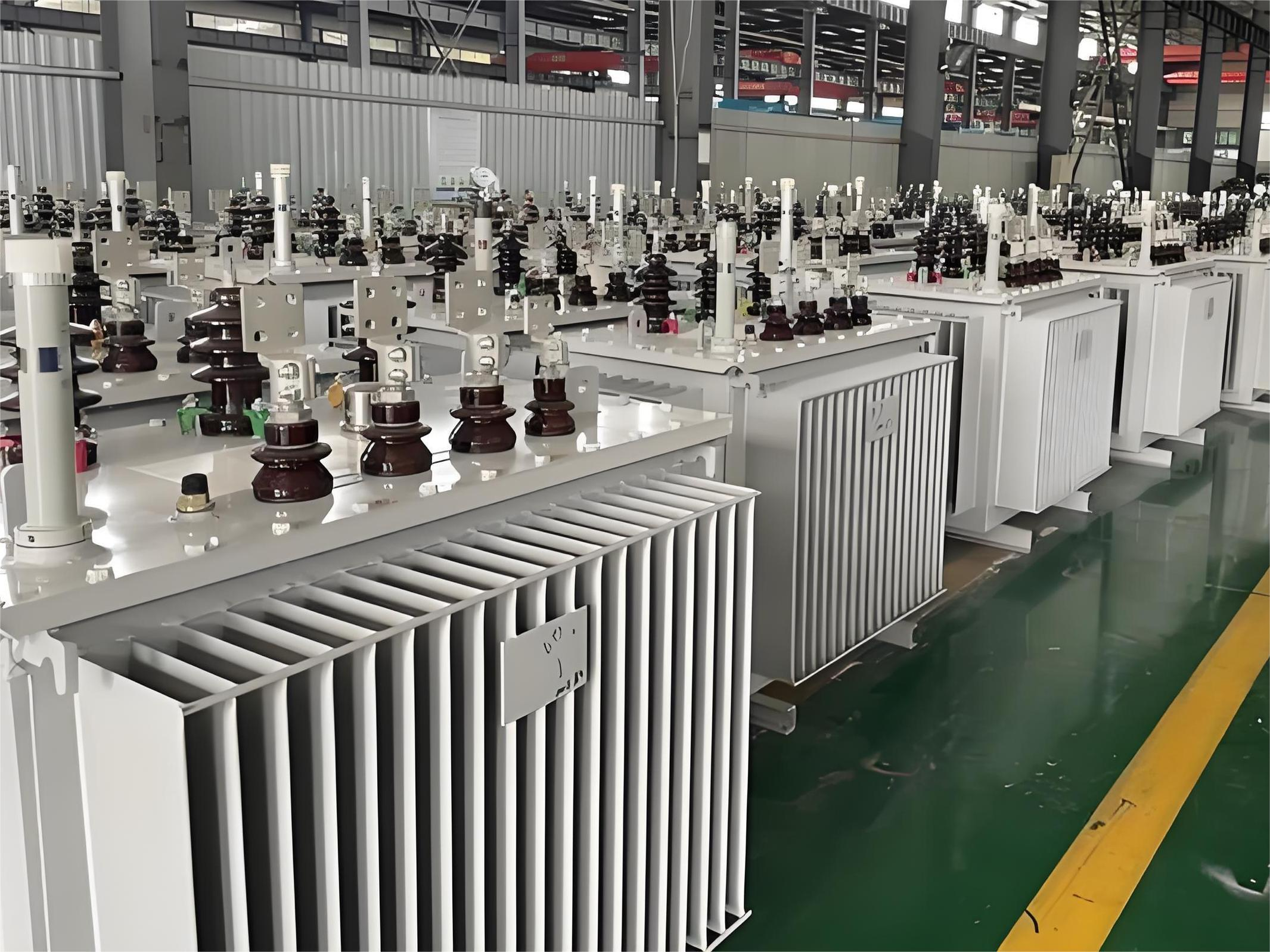
3. Minor Losses
Besides iron and copper losses, transformers also experience other significant losses, collectively known as secondary losses. These mainly include:
1. Magnetic Flux Leakage Loss: Leaking magnetic flux does not flow entirely through the main magnetic circuit but instead flows through structural components of the transformer (such as clamps and the tank), generating eddy currents and heat.
Optimization Measures: Optimize winding arrangement and magnetic shielding structure; use low-resistivity materials to guide leakage flux; or adopt a segmented magnetic design.
2. Lost Components: This consists of eddy current losses and hysteresis losses generated by leakage magnetic fields in metal components (such as bolts and tank walls).
Optimization Measures: Use non-magnetic materials (e.g., stainless steel instead of ordinary steel) to manufacture structural components, or slot in structural components to cut off eddy current paths.
3. Dielectric Loss: In high-frequency applications, the polarization loss of insulating materials under alternating electric fields is particularly significant.
Optimization Measures: Select insulating materials with low dielectric constants and small loss angles (e.g., high-quality oil-paper insulation).
Get a Quote
Regardless of whether you require general advice or specific support, we are happy to help you.